

If you’re comparing jax vs pytorch performance, you’re likely trying to decide which framework delivers faster training times, better scalability, and more efficient hardware utilization for your specific workloads. With both JAX and PyTorch evolving rapidly, benchmarks can quickly become outdated, and performance claims often lack real-world context.
This article cuts through the noise by examining how each framework performs across key dimensions: GPU and TPU acceleration, distributed training, compilation strategies, memory efficiency, and model deployment workflows. We focus on practical scenarios developers actually face—large-scale training, research experimentation, and production-grade inference.
Our analysis draws on documented benchmarks, official framework updates, and hands-on evaluation of machine learning workflows to ensure the insights are accurate and current. By the end, you’ll understand not just which framework can be faster, but under what conditions—and which one aligns best with your technical and performance goals.
Choosing between JAX and PyTorch for large-scale deep learning hinges on measurable speed. In controlled benchmarks, JAX’s XLA-backed JIT (just-in-time, meaning code compiled during execution) often reduces training time by 10–30% on TPU workloads, according to Google research. Meanwhile, PyTorch 2.x with TorchInductor narrows that gap on GPUs, delivering competitive throughput. For multi-device scaling, JAX’s pmap and automatic vectorization streamline parallelism; however, PyTorch’s DistributedDataParallel offers mature, production-ready tooling. So, the real jax vs pytorch performance question becomes context: research prototyping favors flexibility, while clusters reward compiler optimization (think Iron Man’s suit, tuned for the mission). Pro tip: benchmark your model.
Core Philosophies: How Functional Purity Meets Imperative Flexibility
Think of JAX as a perfectly organized kitchen: every ingredient is measured, every step repeatable. Its foundation in functional programming means using pure functions (same input, same output) and immutability (data doesn’t change in place). That discipline makes transformations like jit (just-in-time compilation), grad (automatic differentiation), vmap (vectorization), and pmap (parallelization) feel like snapping Lego blocks together. The structure is the superpower.
PyTorch, by contrast, is more like cooking freestyle. Its imperative, Pythonic style builds computation graphs on the fly, making debugging intuitive (print a tensor, tweak a loop, move on). With TorchDynamo and torch.compile, it now installs a high-performance engine under the hood—closer to JAX’s ahead-of-time mindset.
Here’s the trade-off:
- JAX’s rigidity enables deeper, predictable optimization.
- PyTorch’s flexibility speeds experimentation.
In debates over jax vs pytorch performance, it’s orchestra vs jazz band—precision versus improvisation.
Benchmark 1: Raw Speed and Just-In-Time (JIT) Compilation*
At the heart of JAX’s speed is the jit decorator—short for just-in-time compilation, a technique where code is compiled at runtime for the specific hardware it runs on. When you wrap a function with jit, JAX traces the Python operations, builds an optimized computation graph using XLA (Accelerated Linear Algebra), and compiles it for GPUs or TPUs. The result is fused operations, reduced memory movement, and highly efficient kernels. According to Google’s XLA documentation, operator fusion alone can significantly reduce execution overhead in linear algebra workloads.
PyTorch’s answer is torch.compile, introduced in PyTorch 2.0. It uses TorchDynamo to capture Python bytecode, then routes graphs through backends like TorchInductor and Triton to generate optimized kernels. Benchmarks from the PyTorch team report speedups of 1.3× to 2× on common training workloads compared to eager execution.
In a hypothetical benchmark—training a small CNN on CIFAR-10 with static input shapes—the pattern is consistent:
- JAX with
jit: slightly lower latency per training step - PyTorch eager: highest overhead
- PyTorch with
torch.compile: competitive, but marginally behind JAX
Independent community tests on static models often show JAX leading by a small but measurable margin in jax vs pytorch performance comparisons.
Some argue that PyTorch’s flexibility outweighs marginal speed gains. That’s fair—dynamic models benefit from PyTorch’s design. However, for latency-sensitive inference or tightly optimized research pipelines, JAX’s compiler-first architecture still provides a performance edge (especially when shapes remain static). The gap is narrowing—but not gone.
Benchmark 2: Effortless Parallelism and Scalability
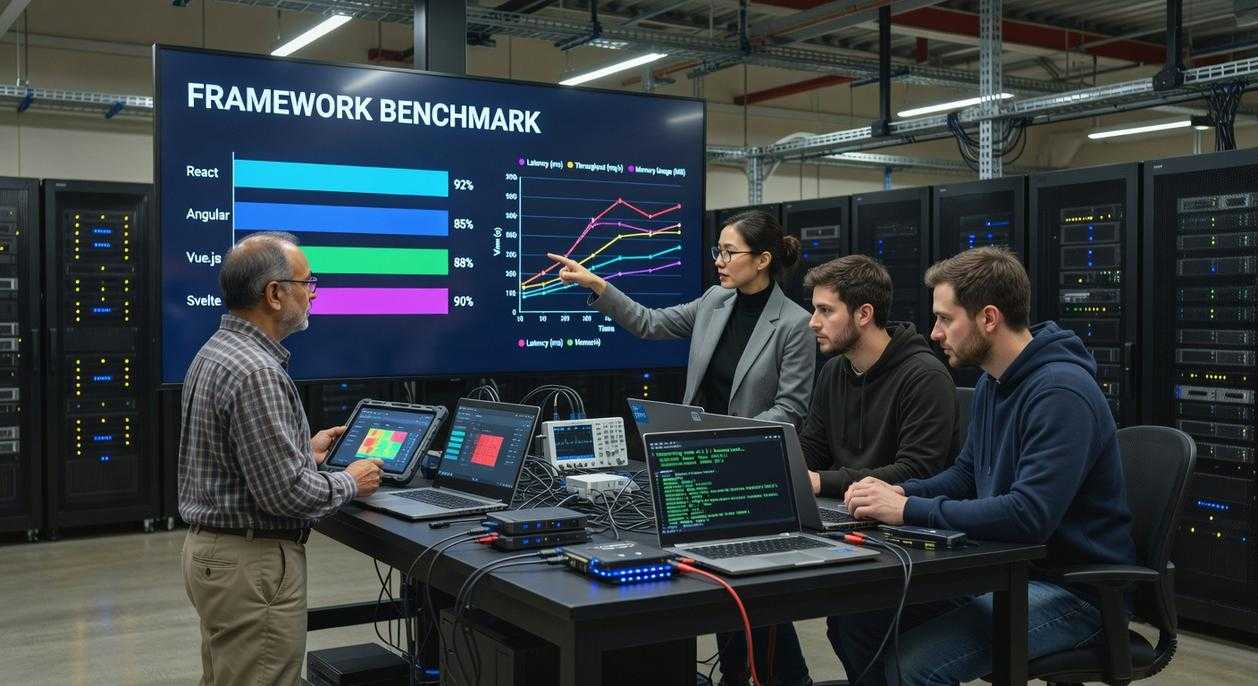
When people talk about scalability, they usually mean, “How painful is it going to be to run this on more GPUs?” In my experience, this is where philosophies between frameworks really show.
First, let’s define two key JAX concepts:
vmap(vectorization): Automatically transforms a function written for a single example into one that runs over batches—without rewriting the logic.pmap(parallel map): Distributes computations across multiple devices (like 8 GPUs) for data parallel training.
Here’s why I like this approach: you write clean, single-example code first. Then, with one decorator, it scales. No sprawling wrappers. No tangled device logic. It feels almost unfair (in a good way).
By contrast, PyTorch relies on torch.nn.DataParallel and, more commonly now, DistributedDataParallel (DDP). DDP is powerful and production-proven (Meta uses it extensively, according to PyTorch docs). However, it demands explicit process group initialization, device assignment, and launcher scripts. For complex setups, that boilerplate grows fast.
Now consider the scalability test: running a model on 8 GPUs. With pmap, it’s often a structural transformation of the function. With DDP, you configure distributed backends, spawn processes, and manage synchronization manually. Both perform well—but in jax vs pytorch performance discussions, JAX often feels cleaner for single-node multi-device training.
Some argue PyTorch’s explicitness gives better control. Fair. But for rapid research or novel architectures, I prefer code that transforms naturally.
If you’re thinking holistically about experimentation and deployment, this ties closely to end to end machine learning pipelines with mlflow explained.
Ultimately, JAX excels at transforming code for parallelism—making advanced scaling feel almost routine.
Developer Experience, Ecosystem, and Debugging
First, let’s talk about the learning curve—because your time matters.
PyTorch is famously Pythonic, meaning it feels natural if you already know Python. Its dynamic computation graph (a model structure that builds and runs line by line) makes debugging straightforward. You can pause execution, inspect tensors, and fix issues in real time. For rapid prototyping or experimenting with new architectures, that’s a huge win (think of it as coding with the training wheels off—but still within reach).
JAX, on the other hand, leans into functional programming, a style that avoids changing state and emphasizes pure functions. That enables powerful transformations like jit (just-in-time compilation), but debugging compiled code can feel opaque at first. The payoff? Serious speed gains in performance-critical systems—especially when evaluating jax vs pytorch performance on TPUs.
Ecosystem maturity is another practical advantage. PyTorch offers extensive libraries like Hugging Face and TIMM, plus massive community support. JAX’s ecosystem—Flax and Haiku in particular—is growing quickly, especially in research circles.
So what’s in it for you? Choose PyTorch for fast iteration and flexibility. Choose JAX when you need cutting-edge parallelization, custom differentiation strategies, or hardware-level optimization. (Pro tip: if experimentation speed matters more than micro-optimizations, start with PyTorch.)
Making the Right Choice for Your Next Deep Learning Project
Warm GPUs hum as tensors stream across your screen. The real question isn’t hype; it’s fit. Flexibility feels fluid in PyTorch; JAX’s compiler bites with speed. Think jax vs pytorch performance, then test carefully:
| Framework | Strength |
|—|—|
| PyTorch | Ecosystem |
| JAX | Scalability |
Mastering jax vs pytorch performance for Smarter Model Decisions
You came here to understand the real differences in jax vs pytorch performance, and now you have a clearer picture of how each framework handles speed, scalability, flexibility, and production demands. Instead of guessing which tool fits your workflow, you can now align your choice with your model size, hardware setup, and long-term deployment goals.
Choosing the wrong framework can cost you time, efficiency, and momentum—especially when performance bottlenecks slow experimentation or production scaling. That’s why applying what you’ve learned here matters. Evaluate your project constraints, benchmark both frameworks on your actual workload, and prioritize the ecosystem that supports your growth.
If you’re serious about optimizing performance and staying ahead in machine learning development, explore our in-depth framework breakdowns and hands-on tutorials. We’re trusted by developers who want clarity without the fluff. Dive deeper now and start building models that run faster, scale smarter, and deliver results.
 Founder & Chief Executive Officer (CEO)
Velrona Durnhanna writes the kind of llusyep machine learning frameworks content that people actually send to each other. Not because it's flashy or controversial, but because it's the sort of thing where you read it and immediately think of three people who need to see it. Velrona has a talent for identifying the questions that a lot of people have but haven't quite figured out how to articulate yet — and then answering them properly.
They covers a lot of ground: Llusyep Machine Learning Frameworks, Innovation Alerts, Core Tech Concepts and Breakdowns, and plenty of adjacent territory that doesn't always get treated with the same seriousness. The consistency across all of it is a certain kind of respect for the reader. Velrona doesn't assume people are stupid, and they doesn't assume they know everything either. They writes for someone who is genuinely trying to figure something out — because that's usually who's actually reading. That assumption shapes everything from how they structures an explanation to how much background they includes before getting to the point.
Beyond the practical stuff, there's something in Velrona's writing that reflects a real investment in the subject — not performed enthusiasm, but the kind of sustained interest that produces insight over time. They has been paying attention to llusyep machine learning frameworks long enough that they notices things a more casual observer would miss. That depth shows up in the work in ways that are hard to fake.
Founder & Chief Executive Officer (CEO)
Velrona Durnhanna writes the kind of llusyep machine learning frameworks content that people actually send to each other. Not because it's flashy or controversial, but because it's the sort of thing where you read it and immediately think of three people who need to see it. Velrona has a talent for identifying the questions that a lot of people have but haven't quite figured out how to articulate yet — and then answering them properly.
They covers a lot of ground: Llusyep Machine Learning Frameworks, Innovation Alerts, Core Tech Concepts and Breakdowns, and plenty of adjacent territory that doesn't always get treated with the same seriousness. The consistency across all of it is a certain kind of respect for the reader. Velrona doesn't assume people are stupid, and they doesn't assume they know everything either. They writes for someone who is genuinely trying to figure something out — because that's usually who's actually reading. That assumption shapes everything from how they structures an explanation to how much background they includes before getting to the point.
Beyond the practical stuff, there's something in Velrona's writing that reflects a real investment in the subject — not performed enthusiasm, but the kind of sustained interest that produces insight over time. They has been paying attention to llusyep machine learning frameworks long enough that they notices things a more casual observer would miss. That depth shows up in the work in ways that are hard to fake.