Technology is evolving at a pace that makes yesterday’s breakthroughs feel outdated overnight. If you’re searching for clear, practical insights into innovation alerts, core tech concepts, digital device strategies, and machine learning frameworks, you’re in the right place. This article is designed to cut through the noise and deliver exactly what you need: actionable understanding you can apply immediately.
We break down complex advancements into structured explanations, practical frameworks, and step-by-step tutorials—so you’re not just reading about trends, you’re learning how to use them. From emerging AI architectures to automation productivity hacks, our goal is to connect theory with real-world implementation.
Our content is built on continuous research, hands-on testing of digital tools, and analysis of current technological shifts across industries. By focusing on clarity, accuracy, and practical application, this guide helps you stay ahead of innovation rather than reacting to it.
Let’s explore the tools, systems, and strategies shaping the next wave of digital transformation.
Beyond “Set and Forget”: Unlocking Peak Automation Performance
Many teams install automation tools and assume the job is done. It’s not. Automation without optimization is like buying a treadmill and never adjusting the speed (technically impressive, practically useless).
Let’s clarify terms. Automation means using software to complete tasks with minimal human input. Workflow optimization means refining those tasks so they run efficiently and accurately over time. Integration refers to how well your tools communicate and share data.
Critics argue constant refinement wastes time. But data from McKinsey shows companies that continuously improve digital processes see significantly higher ROI (McKinsey, 2023).
Apply automation productivity hacks, audit workflows quarterly, and eliminate redundant steps. True efficiency means freeing humans for strategic, high-value thinking.
Establish Your Baseline: The Critical First Step of an Automation Audit
Before you optimize anything, you need a baseline—a clear snapshot of how your systems perform today. A baseline is simply a starting measurement. Without it, improvement is guesswork (and guesswork is expensive).
An automation audit begins by mapping every workflow. A workflow is a sequence of automated steps that complete a task—like routing invoices or triggering email responses. Document everything, from simple filters to advanced robotic process automation (RPA), which uses software “bots” to mimic human actions inside digital systems.
Next, pinpoint bottlenecks. A bottleneck is any stage where work slows or stalls. Look for moments requiring manual intervention. If a bot pauses for human approval three times per cycle, that’s friction.
Then quantify performance. Track:
- Cycle time (how long a task takes end-to-end)
- Error rate (how often outputs need correction)
- Resource consumption (CPU, memory, or system load)
Finally, define concrete KPIs—key performance indicators. Replace vague goals with measurable targets like reducing onboarding time by 40%.
Some argue audits waste time better spent deploying automation productivity hacks. But clarity first prevents scaling broken systems. (Fix the leak before turning up the water pressure.)
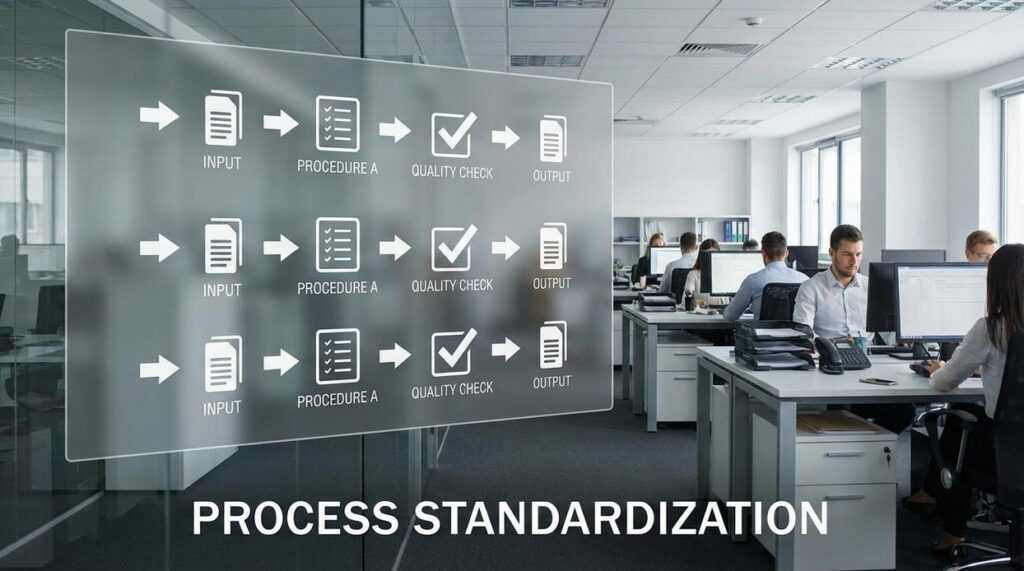
Simplify and Standardize Before Scaling Automation
“The biggest mistake we made?” a project manager once admitted to me. “We automated chaos.”
That’s the essence of the Garbage In, Garbage Out rule—a long-standing computing principle meaning that flawed input produces flawed output (IBM documentation frequently references this concept in data processing guidance). In other words, if your manual process is messy, automation simply makes the mess move faster.
At first, automation feels like a shortcut. However, efficiency doesn’t begin with tools; it begins with simplification. As one operations lead put it, “We thought software would fix our workflow. Turns out, our workflow needed fixing first.”
So where do you start?
First, document every step of the workflow you plan to automate. Write it all down. Surprisingly often, this exposes redundant approvals, duplicate data entry, or outdated steps that no longer serve a purpose (yes, even that spreadsheet someone guards like it’s the One Ring).
Next, standardize inputs. Create consistent data formats—MM-DD-YYYY for dates, uniform file naming conventions, required CRM fields. Without this, automation tools can misfire or stall entirely. One sales director told her team, “If the data isn’t clean, the dashboard won’t be either.” She was right.
Consider a practical example: before automating a sales report, standardize CRM data entry fields. When entries follow identical rules, the system pulls clean data every time—no manual cleanup required.
Some argue speed matters more than structure. But rushing automation without process hygiene leads to endless troubleshooting. The payoff for doing it right? Fewer breakdowns, higher reliability, and smarter automation productivity hacks that actually save time instead of draining it.
Integrate Your Tech Stack for a Seamless Data Flow
Let’s be honest—digital silos are exhausting. You enter customer data in one platform, copy it into another, then double-check a third because something didn’t sync (again). The biggest drain on efficiency isn’t lack of effort; it’s systems that refuse to talk to each other.
An API (Application Programming Interface) is simply a messenger that lets two applications exchange data. Middleware tools like Zapier or Workato act as translators between them. When used correctly, they eliminate manual handoffs—the kind that cause typos, delays, and those “Wait, which version is correct?” moments.
The goal is a Single Source of Truth—one reliable data hub where updates automatically reflect everywhere. For example, when a new customer is added to your CRM, their billing and support profiles should generate instantly. No sticky notes. No duplicate spreadsheets.
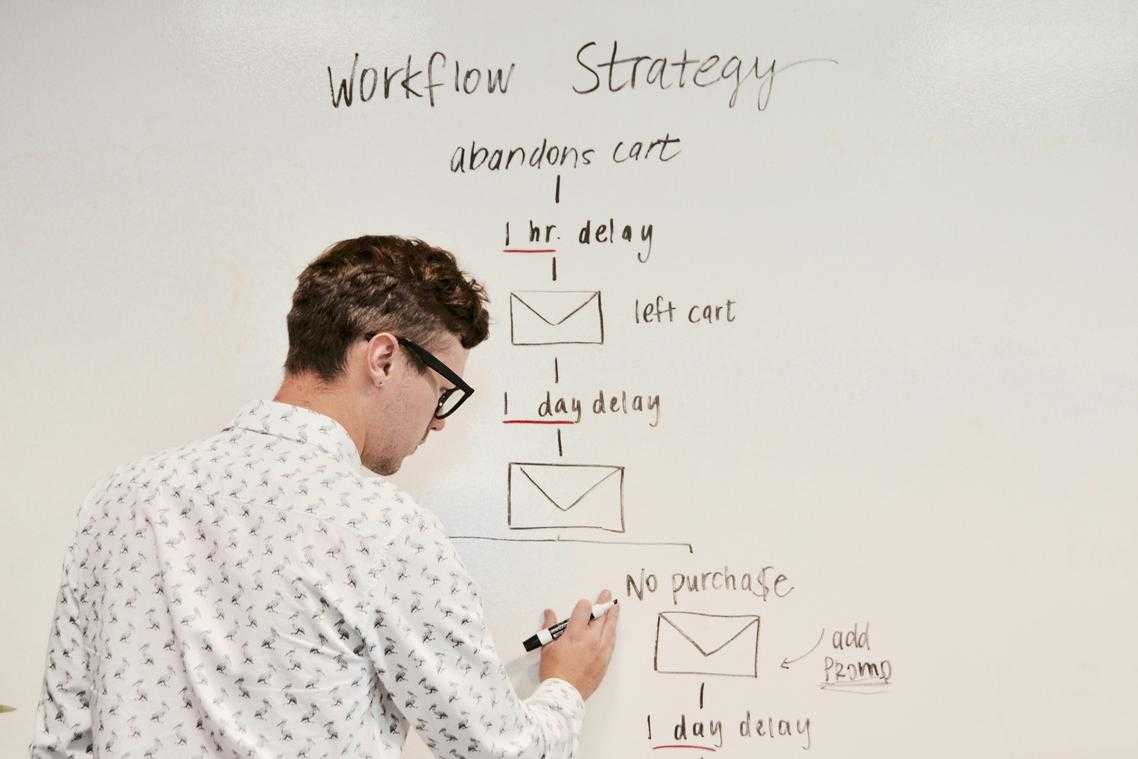
Even better, design workflows around event-driven triggers. If a task is marked “complete” in Asana, it should notify Slack and update your dashboard automatically. That’s smart orchestration, not digital babysitting.
Use automation productivity hacks in the section once exactly as it is given
Skeptics argue integrations are complex or risky. Fair point—poor setup can create chaos. But disconnected tools already create chaos.
Pro tip: audit recurring manual tasks first; they’re prime automation candidates.
And while tightening your systems, don’t overlook security—especially your infrastructure. Review how to secure your home network in under an hour to protect the data flowing through it.
Implement a Cycle of Continuous Monitoring and Improvement
I once launched an automated reporting workflow I was sure would run flawlessly. Two weeks later, a silent API failure stalled everything (and no one noticed until a client asked). That moment taught me a simple truth: automation is a process, not a project.
To keep systems healthy, build a rhythm of review:
- Establish monitoring dashboards: Track KPIs like error rates, latency, and output quality in real time so small issues don’t snowball.
- Create human-in-the-loop feedback: The people closest to the workflow spot friction first—give them a clear channel to flag problems and suggest upgrades.
- Leverage machine learning frameworks: Predict failures, surface anomalies, and recommend refinements before breakdowns occur.
Some argue automation should “just work” once deployed. In reality, even the best automation productivity hacks require tuning. Treat workflows like living systems—observe, adjust, improve—and they’ll compound value over time.
Your Roadmap to a Hyper-Efficient Automated Workplace
The problem hasn’t disappeared. Inefficient, unmonitored automation is a hidden drain on resources and productivity. Some argue automation always saves time, but I’m not entirely sure that’s true without oversight.
True efficiency comes from a disciplined cycle: audit, simplify, integrate, monitor. I don’t pretend there’s a perfect formula — even experts debate metrics. But ignoring performance data is riskier.
Start small. Choose one high-impact, low-efficiency process this week and run a full audit. Apply practical automation productivity hacks where bottlenecks appear. One focused fix can spark a culture of continuous improvement today.
Take Control of Your Digital Efficiency Today
You came here looking for smarter ways to streamline your workflow and unlock the real potential of modern tech. Now you have a clearer understanding of how innovation alerts, core tech concepts, digital device strategies, machine learning frameworks, and automation productivity hacks work together to eliminate friction and accelerate results.
The real pain point isn’t a lack of tools — it’s wasted time, scattered systems, and missed opportunities to automate what drains your energy. Staying stuck in reactive mode slows growth and limits what you can achieve.
The solution is simple: apply what you’ve learned. Start integrating smarter automation into your daily workflows, refine your device strategies, and leverage machine learning frameworks to reduce manual effort and increase output. Small optimizations compound fast.
If you’re ready to stop juggling inefficiencies and start operating at peak performance, take the next step now. Explore our expert tutorials and proven frameworks trusted by thousands of forward-thinking professionals. Put these strategies into action today and transform the way you work — faster, smarter, and with measurable results.
 Founder & Chief Executive Officer (CEO)
Velrona Durnhanna writes the kind of llusyep machine learning frameworks content that people actually send to each other. Not because it's flashy or controversial, but because it's the sort of thing where you read it and immediately think of three people who need to see it. Velrona has a talent for identifying the questions that a lot of people have but haven't quite figured out how to articulate yet — and then answering them properly.
They covers a lot of ground: Llusyep Machine Learning Frameworks, Innovation Alerts, Core Tech Concepts and Breakdowns, and plenty of adjacent territory that doesn't always get treated with the same seriousness. The consistency across all of it is a certain kind of respect for the reader. Velrona doesn't assume people are stupid, and they doesn't assume they know everything either. They writes for someone who is genuinely trying to figure something out — because that's usually who's actually reading. That assumption shapes everything from how they structures an explanation to how much background they includes before getting to the point.
Beyond the practical stuff, there's something in Velrona's writing that reflects a real investment in the subject — not performed enthusiasm, but the kind of sustained interest that produces insight over time. They has been paying attention to llusyep machine learning frameworks long enough that they notices things a more casual observer would miss. That depth shows up in the work in ways that are hard to fake.
Founder & Chief Executive Officer (CEO)
Velrona Durnhanna writes the kind of llusyep machine learning frameworks content that people actually send to each other. Not because it's flashy or controversial, but because it's the sort of thing where you read it and immediately think of three people who need to see it. Velrona has a talent for identifying the questions that a lot of people have but haven't quite figured out how to articulate yet — and then answering them properly.
They covers a lot of ground: Llusyep Machine Learning Frameworks, Innovation Alerts, Core Tech Concepts and Breakdowns, and plenty of adjacent territory that doesn't always get treated with the same seriousness. The consistency across all of it is a certain kind of respect for the reader. Velrona doesn't assume people are stupid, and they doesn't assume they know everything either. They writes for someone who is genuinely trying to figure something out — because that's usually who's actually reading. That assumption shapes everything from how they structures an explanation to how much background they includes before getting to the point.
Beyond the practical stuff, there's something in Velrona's writing that reflects a real investment in the subject — not performed enthusiasm, but the kind of sustained interest that produces insight over time. They has been paying attention to llusyep machine learning frameworks long enough that they notices things a more casual observer would miss. That depth shows up in the work in ways that are hard to fake.