
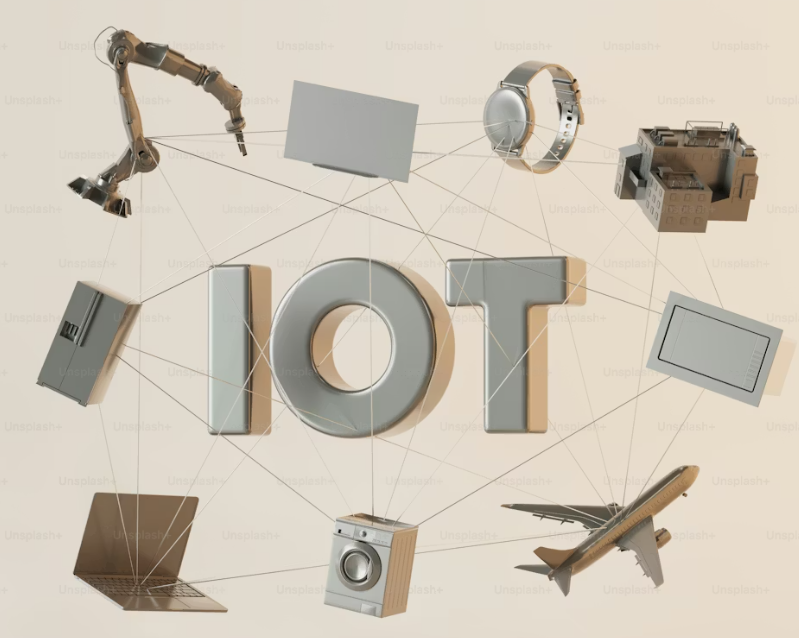
The Internet of Things (IoT) has fundamentally reshaped how we interact with technology, and nowhere is this transformation more evident than in the proliferation of wearable devices. From smartwatches and fitness trackers to advanced medical monitors and AR glasses, IoT wearables are now tightly woven into both personal and professional spheres. However, as these devices become more widespread, the challenges of managing IoT wearables, ensuring security, performance, data integrity, and scalability grow increasingly complex. This article explores how artificial intelligence (AI) is revolutionizing the management of IoT wearables, bringing efficiency, security, and actionable insights to organizations and end-users alike.
Evolving Challenges in IoT Wearable Management
Managing IoT wearables involves much more than simply keeping devices connected. With millions of devices in use globally, organizations must contend with issues like device authentication, software updates, real-time analytics, battery optimization, and user privacy. Each device generates a continuous stream of data, which must be processed, analyzed, and secured to deliver value while maintaining compliance with industry regulations.
Moreover, the diversity of IoT wearables—ranging from consumer fitness bands to enterprise-grade health monitors—creates additional complexity. Device fragmentation, differing operating systems, and varied connectivity standards can make centralized management a daunting task. As the IoT ecosystem continues to expand, traditional methods of managing these devices are proving insufficient, highlighting a pressing need for smarter, more adaptive solutions.
How AI Enhances the Management of IoT Wearables
Artificial intelligence offers a powerful toolkit for addressing the unique challenges associated with managing IoT wearables. By leveraging machine learning, natural language processing, and predictive analytics, AI can automate and optimize many aspects of device management that would otherwise require extensive manual intervention.
For example, AI-powered systems can automatically detect anomalies in device behavior, flagging potential security threats or malfunctions before they escalate. These systems continuously learn from device data, adapting their algorithms to recognize emerging patterns or vulnerabilities. In large-scale deployments, AI can orchestrate firmware updates across thousands of devices, ensuring that each wearable remains secure and up to date without disrupting user experience.
Furthermore, AI-driven analytics provide actionable insights into device usage and performance. Organizations can monitor metrics such as battery health, network connectivity, and data transmission in real time, allowing for proactive maintenance and resource allocation. This level of automation not only streamlines operations but also frees IT teams to focus on more strategic tasks.
Security and Privacy in AI-Powered IoT Wearable Management
Security is a paramount concern when managing IoT wearables, particularly those used in sensitive environments like healthcare or finance. AI introduces robust new layers of defense by continuously monitoring device activity and network traffic for signs of suspicious behavior. Machine learning models can differentiate between normal and abnormal patterns, swiftly identifying potential breaches or unauthorized access attempts.
In addition, AI can facilitate secure device onboarding and authentication, employing techniques such as biometric verification or behavioral analysis. These advanced methods reduce reliance on static credentials, which are more susceptible to compromise. For end-users, this means enhanced protection of personal data and greater peace of mind.
Privacy considerations are just as critical. AI systems managing IoT wearables must adhere to regulatory frameworks such as the General Data Protection Regulation (GDPR) or the Health Insurance Portability and Accountability Act (HIPAA). By automating data minimization and anonymization processes, AI helps organizations safeguard user privacy while still extracting valuable insights from device data.
Optimizing Performance and User Experience
The effectiveness of managing IoT wearables depends heavily on maintaining optimal device performance. AI algorithms can predict when a device is likely to experience issues—such as depleted batteries, connectivity problems, or hardware failures—enabling timely intervention. Predictive maintenance extends device lifespans and minimizes downtime, which is particularly important for mission-critical applications like remote health monitoring or industrial safety.
User experience is also enhanced through intelligent, context-aware management. AI can analyze usage patterns and environmental factors to tailor device settings automatically. For instance, a smart fitness tracker might adjust data collection intervals based on user activity levels, conserving battery life without sacrificing accuracy. In enterprise settings, AI can ensure that only authorized users access sensitive features, dynamically adapting access controls as organizational roles evolve.
Real-World Applications and Case Studies
The benefits of AI-powered management for IoT wearables are already being realized across diverse industries. In healthcare, hospitals deploy fleets of wearable monitors to track vital signs of patients remotely. AI-driven platforms aggregate and analyze this data in real time, alerting medical staff to any deviations that might indicate health deterioration. This enables faster interventions and more personalized care, ultimately improving patient outcomes.
In the manufacturing sector, companies use wearable sensors to monitor worker safety and operational efficiency. AI analyzes data from these devices to identify patterns associated with fatigue, hazardous movements, or equipment malfunctions. By proactively addressing these risks, organizations can reduce accidents and optimize workforce productivity.
Even in consumer technology, managing IoT wearables with AI delivers tangible benefits. Fitness app providers use AI to interpret data from wearable trackers, offering users personalized recommendations to achieve their health goals. These systems dynamically adjust targets and feedback based on real-time performance, creating a more engaging and motivating experience.
Data-Driven Insights for Continuous Improvement
One of the most compelling advantages of AI in managing IoT wearables is the ability to transform raw device data into actionable insights. By aggregating and analyzing information across large device populations, AI uncovers trends that might be invisible to human operators. This data-driven approach informs product development, policy decisions, and resource allocation.
For example, organizations can identify which device models require more frequent maintenance, which features are most popular among users, or which environmental conditions affect device reliability. These insights guide continuous improvement efforts, ensuring that wearable management strategies remain aligned with evolving user needs and technological advancements.
Overcoming Implementation Barriers
Despite its promise, implementing AI-powered solutions for managing IoT wearables is not without challenges. Integrating AI with existing device management platforms requires careful planning and investment in compatible infrastructure. Data quality and availability are critical factors; AI models depend on accurate, representative data to deliver reliable results.
There are also considerations related to transparency and explainability. Stakeholders must understand how AI-driven decisions are made, particularly in regulated industries where accountability is essential. Adopting frameworks for explainable AI and maintaining thorough documentation can help build trust and facilitate regulatory compliance.
Finally, organizations must invest in ongoing training and support for personnel. As AI continues to evolve, staying current with best practices and emerging tools is key to maximizing the value of these advanced management systems.
The Future of Managing IoT Wearables
As the landscape of IoT wearables continues to expand, the role of AI in their management will only grow in importance. Advances in edge computing, federated learning, and 5G connectivity will further enhance the capabilities of AI-powered management platforms, enabling faster, more secure, and more efficient operations.
Organizations that embrace AI-driven approaches to managing IoT wearables will be better positioned to navigate the complexities of large-scale deployments, safeguard user data, and deliver superior user experiences. By fostering a culture of innovation and continuous improvement, these organizations can unlock the full potential of wearable technology in both consumer and enterprise contexts.
Conclusion
Managing IoT wearables presents a multifaceted challenge that extends beyond simple device connectivity. The rise of AI-powered solutions marks a significant leap forward, offering automation, security, and actionable insights that traditional methods cannot match. By leveraging the strengths of artificial intelligence, organizations can streamline device management, enhance security and privacy, and provide users with a seamless, high-performance experience. As technology continues to advance, AI will remain at the forefront of managing IoT wearables, empowering organizations to harness the transformative power of connected devices with confidence and agility.
 Director of Content & Digital Strategy
Roxie Winlandanders writes the kind of practical tech application hacks content that people actually send to each other. Not because it's flashy or controversial, but because it's the sort of thing where you read it and immediately think of three people who need to see it. Roxie has a talent for identifying the questions that a lot of people have but haven't quite figured out how to articulate yet — and then answering them properly.
They covers a lot of ground: Practical Tech Application Hacks, Expert Tutorials, Core Tech Concepts and Breakdowns, and plenty of adjacent territory that doesn't always get treated with the same seriousness. The consistency across all of it is a certain kind of respect for the reader. Roxie doesn't assume people are stupid, and they doesn't assume they know everything either. They writes for someone who is genuinely trying to figure something out — because that's usually who's actually reading. That assumption shapes everything from how they structures an explanation to how much background they includes before getting to the point.
Beyond the practical stuff, there's something in Roxie's writing that reflects a real investment in the subject — not performed enthusiasm, but the kind of sustained interest that produces insight over time. They has been paying attention to practical tech application hacks long enough that they notices things a more casual observer would miss. That depth shows up in the work in ways that are hard to fake.
Director of Content & Digital Strategy
Roxie Winlandanders writes the kind of practical tech application hacks content that people actually send to each other. Not because it's flashy or controversial, but because it's the sort of thing where you read it and immediately think of three people who need to see it. Roxie has a talent for identifying the questions that a lot of people have but haven't quite figured out how to articulate yet — and then answering them properly.
They covers a lot of ground: Practical Tech Application Hacks, Expert Tutorials, Core Tech Concepts and Breakdowns, and plenty of adjacent territory that doesn't always get treated with the same seriousness. The consistency across all of it is a certain kind of respect for the reader. Roxie doesn't assume people are stupid, and they doesn't assume they know everything either. They writes for someone who is genuinely trying to figure something out — because that's usually who's actually reading. That assumption shapes everything from how they structures an explanation to how much background they includes before getting to the point.
Beyond the practical stuff, there's something in Roxie's writing that reflects a real investment in the subject — not performed enthusiasm, but the kind of sustained interest that produces insight over time. They has been paying attention to practical tech application hacks long enough that they notices things a more casual observer would miss. That depth shows up in the work in ways that are hard to fake.